
Microcement in Miami,
over the tile you already have.
Seamless floors, walls and showers applied on top of your existing surfaces. No demolition, no container on the property, and nothing carried out through a lobby your building would rather keep clean.
A finish, not a renovation.
Microcement is a multi-layer system applied by hand, a few millimeters thick, bonded directly to what is already there. Tile, concrete, drywall. It cures into one continuous waterproof surface with no grout lines anywhere in it.
That matters more in Miami than almost anywhere, because a large share of this market lives above the fourth floor. In a tower, tearing out a tile floor is not simply expensive. It is a permit, a container, a reserved freight elevator and a stack of neighbor complaints. We skip all of it.
The finish goes on floors, shower walls, curbless pans, feature walls, stairs, ceilings and countertops. Same system, same sealer, same hand.
The building is the hard part, not the bathroom.
Renovating a high-rise unit in Miami is a different sport from renovating a house, and the building is usually what kills the project rather than the price.
No demolition means no container.
Tile removal produces tons of debris that has to ride down in the freight elevator and land in a container somewhere on the property. Plenty of Miami associations restrict that outright. A microcement install arrives in buckets.
It fits inside the hours you are given.
Most towers here allow contractor work on weekdays only, inside a set window, with the elevator booked in advance. Because there is no jackhammering phase, the noisy part of this job effectively does not exist.
Nothing gets cut into the slab.
Post-tensioned slabs are common in Miami high-rises, and cutting into one is a serious problem rather than an inconvenience. This finish goes on top and adds a few millimeters.
Board approval is a shorter conversation.
We provide the written scope before anything starts, and your management company gets the same document you do. A no-demolition scope is a far easier thing to get signed off.
Every building writes its own rules and Miami's tend to be the longest. We read yours before quoting rather than after. That is part of the site visit.
Drag to watch the tile disappear.
No demolition, no new plumbing, no tile torn out. Microcement applied directly over the existing surface.
Drag the handle, or use the left and right arrow keys.
Want the number for your room?
The calculator asks for square footage and which surfaces you are doing, then emails you a real range in about a minute. You get it in writing without talking to anyone first.
Every photograph below is a Monarch installation.
No stock imagery, no renders, no borrowed portfolio. These are South Florida homes Michael finished himself.


Miami-Dade, from the Grove to the beach.
Michael is based in Deerfield Beach and runs every project personally, so Miami is a planned day rather than a drop-in. We book Miami-Dade work in blocks and give you the dates up front instead of a vague window.
Not on the list? Ask. If it is between Miami and Palm Beach the answer is almost always yes.
We also work in Fort Lauderdale, Weston, Boca Raton, Delray Beach and Coral Springs.
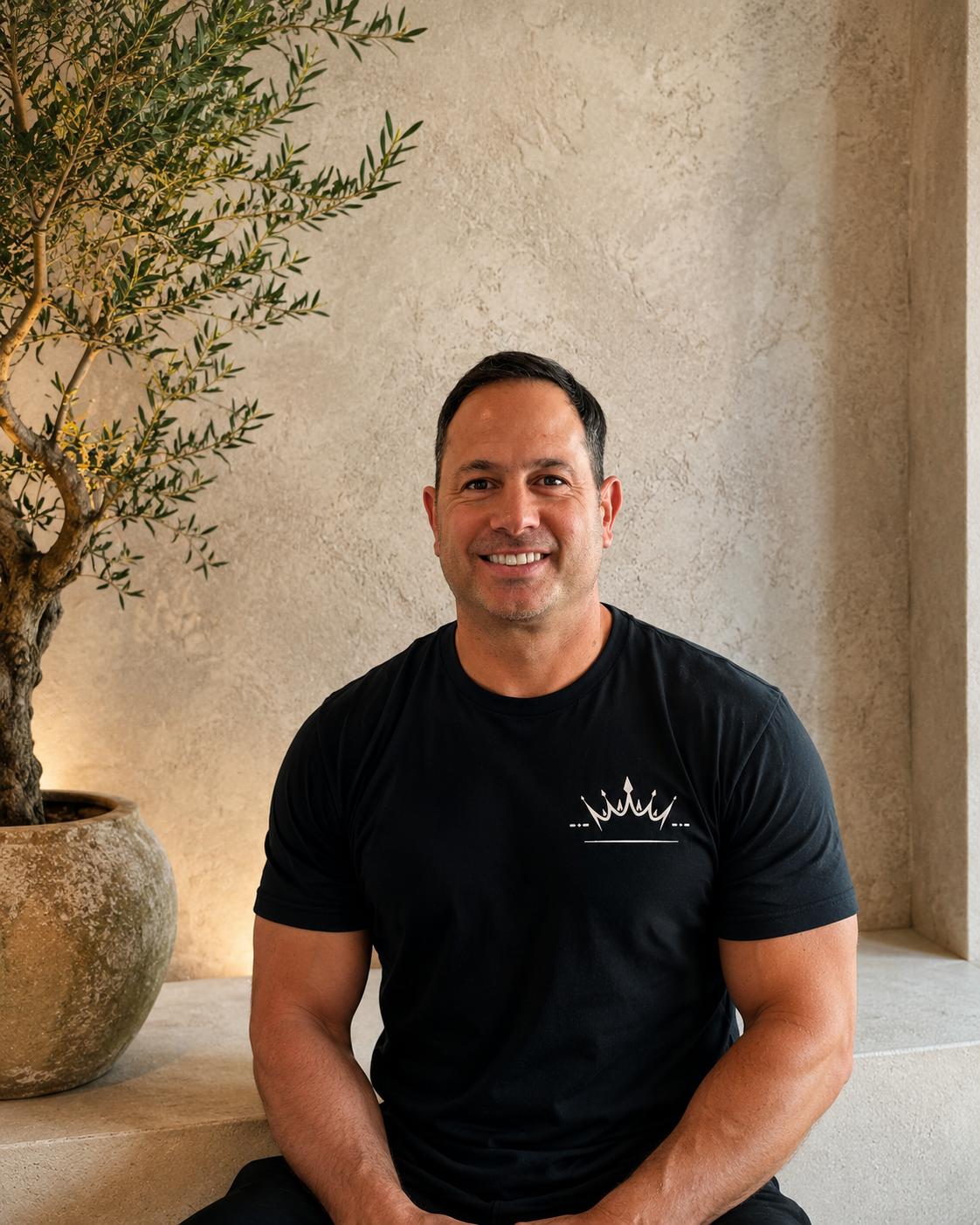
The man who teaches this system
leads your project.
Monarch was founded by Michael Daniels, a U.S. Marine Corps veteran and one of the first certified ForCrete installers in the country. He trains new applicators for ForCrete Americas, and he leads every Monarch project personally alongside a crew he trained himself.
He lives in Deerfield Beach and works from Miami up through Palm Beach. When you call about your Miami project, you talk to him.
Book a free consultationWhat it costs.
Pricing runs on square footage and on which system the surface needs, and the surface decides that, not us. A shower that gets wet every day is a different build from a feature wall.
There is a calculator on the home page that gives you a real range in about a minute, and it emails you the breakdown so you have it in writing. It is a range, honestly labeled as one. The firm number comes after somebody stands in the room.
Preparation, primer, mesh, base coats, color coats, sealer and labor are all in the figure.
The deposit reserves your dates. The balance is due once the finish coats are complete, before the final sealer goes on.
Your written estimate carries the actual number of days on site for your specific scope.
Before you book.
What does microcement cost?
Every project is custom, so pricing depends on surface area, existing conditions and the finish you select. Bathroom projects begin around $6,000, and most full bathrooms land between $6,000 and $18,000 depending on total surface area. Larger floor, wall and ceiling installations typically run $18 to $24 per square foot of total surface area. You get exact numbers after a short consultation.
Can it go over my existing tile?
In most cases, yes. Microcement is applied over existing surfaces like tile, concrete and drywall, which usually means no demolition and no mess. The surface does need to be sound and stable, so we confirm the condition at the site visit before anything is scheduled.
Is it really waterproof?
Yes. The system we install is fully waterproof once the primer and layers are in place, which is what makes it suitable for showers, bathrooms and other wet areas. Bathrooms are one of our most common projects.
Will it crack?
The system we install is an epoxy-based microcement, so unlike air-cured products there is no shrinkage as it cures, and it has very high tensile and compression strength. It will not fix a substrate that is unstable or damp underneath, which is exactly what gets checked before a number is written down.
How many days will you be in my house?
A single bathroom is typically 6 to 8 days on site. A multi-room project, or all the floors in a home, usually runs 8 to 12 days. A whole home is 2 to 4 weeks. Because the finish goes over the existing surface there is no demolition phase, so the schedule is short and predictable.
Do you actually work in Miami?
Yes. Michael is based in Deerfield Beach and runs every project personally from Miami up through Palm Beach, Miami included. If your street is not on the list above, ask. The answer is almost always yes.
Still deciding?
Answer a few questions about your room, then pick a time. Thirty minutes on the phone with Michael, who gives you real numbers rather than a guess. If it looks like a fit, he comes out and measures in person before anything is booked.
Salt air, humidity, and a slab that moves.
South Florida is unkind to finishes. Humidity changes how material cures, coastal buildings carry salt in the air, and what is under your tile is not always what the plans said it was.
The system we install is epoxy-based, so it does not shrink as it cures. Air-cured microcements do, and that is where hairline cracking usually comes from. It will not fix a substrate that is unstable, cracked or damp underneath, which is exactly what gets checked before a number is written down rather than discovered halfway through.
Michael is a certified ForCrete installer, one of the first in the United States, and trains new applicators for ForCrete Americas. The material is not sold to anyone without that certification. On your job he is the one holding the trowel.
OwnedForCrete
Certified Miami to
Palm BeachOwner on
Every Job
Start with a few questions.
Tell us about your room and pick a time. Thirty minutes on the phone with Michael, who will ask about the space and give you a realistic range on the call. Nothing is booked until he has seen the surface in person, and that visit costs nothing either.
Tell us about your space Get a ballpark firstOr call and text (561) 288-2474
(561) 288-2474 · [email protected] · Terms · Privacy