
A shower with
nothing to scrub.
Fully waterproof once the primer and layers are in. Walls, pan, bench and niche finished as one continuous surface, with no grout line anywhere for mold to sit in.
Waterproofing and finish, in the same material.
In a tiled shower the waterproofing is a membrane hidden behind the tile, and the tile is decoration on top of it. With microcement those are the same thing. The surface you are looking at is the surface keeping water out.
The system is epoxy-based rather than air-cured, which matters in a wet area. It does not shrink as it cures, it has very high tensile and compression strength, and once the primer, mesh, base coats, color coats and sealer are in, the whole enclosure is one waterproof piece.
That includes the parts that usually give trouble. The inside corner where two walls meet. The joint where the wall meets the pan. The underside of a bench. The back of a niche. In tile, every one of those is a grout line or a caulk joint, and every one of them is where a bathroom eventually fails. Here there is no joint, because there is nothing to join.
It goes on the shower walls, the pan, the bench, the niche, the tub surround, the vanity, the bathroom floor and the ceiling. Same system, same sealer, same hand, usually in the same visit.
The maintenance just stops.
There is no grout to scrub.
Grout is porous, it holds soap, it darkens, and in a humid house it grows things. The reason people replace a shower that is structurally fine is almost always the grout. Take it out of the build and that reason goes away.
Curbless pans get formed, not assembled.
A curbless entry in tile means a linear drain, a pitched substrate and a lot of cut pieces meeting at the threshold. In microcement the pan is formed and finished as one surface that simply falls to the drain.
Benches and niches are part of the wall.
Built in place and finished in the same pass as everything around them. No lipped edge, no separate trim piece, no caulk line along the top of the bench.
One trade instead of three.
A tiled shower needs a waterproofer, a tile setter and sometimes a glass installer coordinating around each other. Here it is Michael, start to finish.
Bathrooms are the most common project we do, which means the details above are not theory. They are the things that come up on every single job.
The whole room, or the one surface that bothers you.
Plenty of people start with the shower and come back for the rest of the room later. Both are normal.
Floor to ceiling in one surface. Any color, matte or with a sheen, matched to the rest of the room.
Formed to fall to the drain, finished in the same material as the walls, with no threshold to step over.
Built in place and finished in the same pass, so there is no lipped edge and no caulk line to go black.
The wall around a drop-in or freestanding tub, including the deck, as one piece.
Floating vanities built on site, integrated basins, and the wall behind them in the same finish.
Walls, floor, ceiling and fixtures surround, with the whole room reading as one surface.
Venetian plaster is the companion on the dry walls of a bathroom. Microcement does the wet work.
Drag to watch the tile disappear.
Applied directly over the existing tile. No demolition, no new plumbing, nothing torn out to get here.
Drag the handle, or use the left and right arrow keys.
Want the number for your bathroom?
The calculator asks for square footage and which surfaces you are doing, then emails you a real range in about a minute. Bathrooms are the thing it is best at.
Every photograph below is a Monarch installation.
No stock imagery, no renders, no borrowed portfolio. These are South Florida homes Michael finished himself.


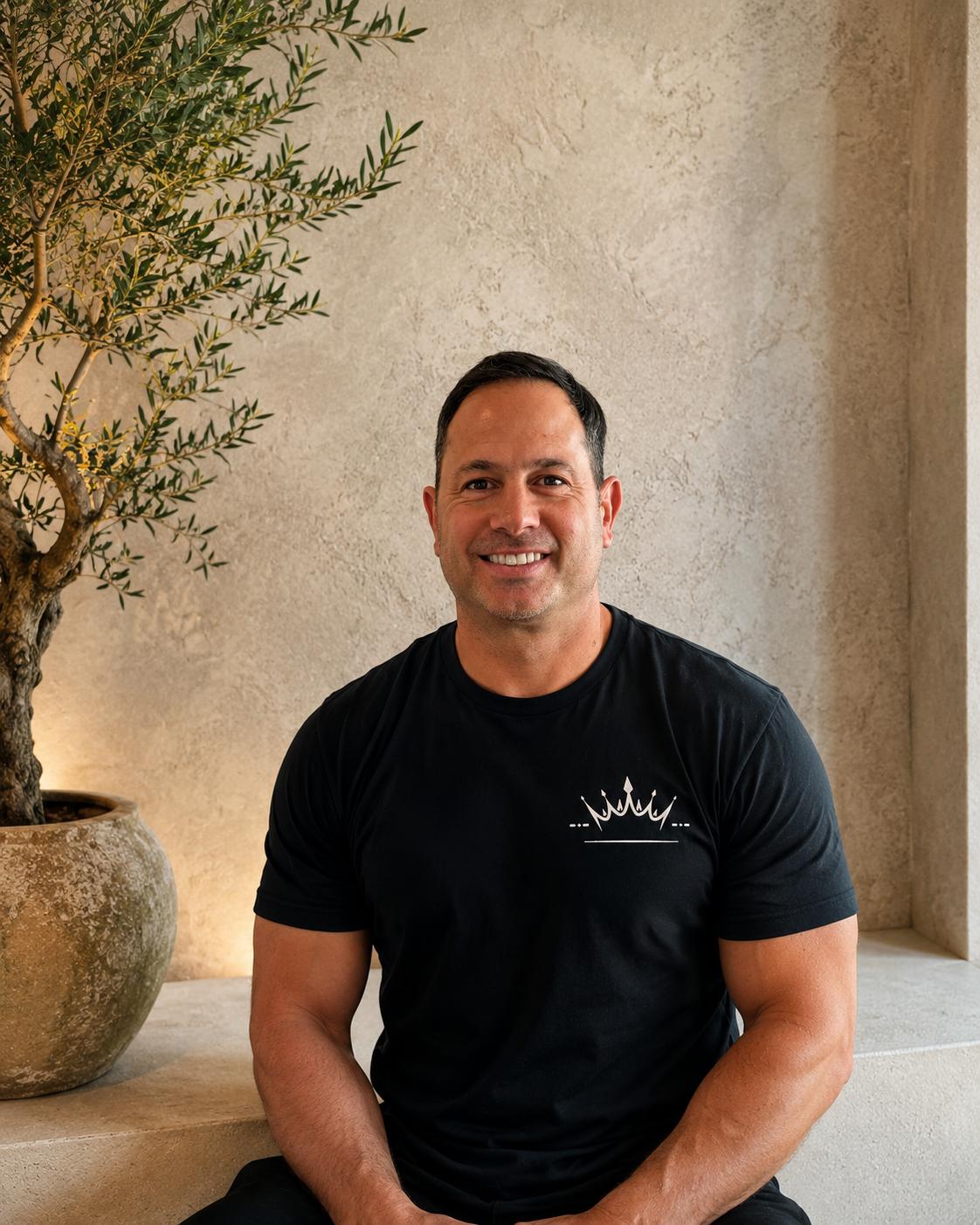
The man who teaches this system
leads your project.
Monarch was founded by Michael Daniels, a U.S. Marine Corps veteran and one of the first certified ForCrete installers in the country. He trains new applicators for ForCrete Americas, and he leads every Monarch project personally alongside a crew he trained himself.
Wet areas are where a hand-applied finish is either done properly or done twice. Corners, pan falls and the joint behind a bench are not things you learn from a data sheet. He lives in Deerfield Beach and works from Miami up through Palm Beach, and when you call, you talk to him.
Book a free consultationWhat it costs.
Bathrooms begin around $6,000, and most full bathrooms land between $6,000 and $18,000 depending on how much total surface area is involved. A shower enclosure on its own sits at the lower end, a floor-to-ceiling wet room at the upper.
The number moves on surface area rather than room size, which catches people out. A small bathroom done floor to ceiling can carry more square footage than a larger one where only the shower is being finished. The calculator asks which surfaces for exactly that reason.
There is a calculator on the home page that gives you a real range in about a minute, and it emails you the breakdown so you have it in writing. It is a range, honestly labeled as one. The firm number comes after somebody stands in the room.
Where bathroom projects start. Most full bathrooms land between $6,000 and $18,000 by total surface area.
The deposit reserves your dates. The balance is due once the finish coats are complete, before the final sealer.
Typical time on site for a single bathroom. Back in regular use about a week after the sealer goes down.
Before you book.
Is it really waterproof?
Yes. The system we install is fully waterproof once the primer and layers are in place, which is what makes it suitable for showers, pans and wet rooms. The finish and the waterproofing are the same material rather than tile sitting on top of a hidden membrane.
Is the shower floor slippery?
The pan is finished with a textured sealer rather than the polished one used on walls, which gives it grip underfoot while staying easy to clean. We specify that at the sample stage so you know what you are getting before anything goes down.
Can it go over my existing tile shower?
In most cases, yes, and that is the usual way we do it. The tile stays, which means no demolition and no new plumbing. The surface does need to be sound and dry, so we confirm that at the site visit before anything is scheduled.
How do I clean it?
Warm water and a little dish soap. No specialty cleaners, no grout brush, and no bleach or abrasives, which dull the sealer over time. Because there is no grout, cleaning a microcement shower is wiping a surface rather than scrubbing a grid.
What does a bathroom cost?
Bathroom projects begin around $6,000, and most full bathrooms land between $6,000 and $18,000 depending on total surface area. Larger floor, wall and ceiling installations typically run $18 to $24 per square foot of total surface area. You get exact numbers after a short consultation.
How long is the bathroom out of use?
A single bathroom is typically 6 to 8 days on site, and it goes back into regular use about a week after the final sealer. There is no demolition phase, so the room is not open and unusable for weeks the way a tile rebuild would be.
Still deciding?
Answer a few questions about the room, then pick a time. Thirty minutes on the phone with Michael, who gives you real numbers rather than a guess.
Miami up through Palm Beach.
Michael is based in Deerfield Beach and runs every project personally. Pick your city for the neighborhoods we cover and the work we have done there.
Not on the list? Ask. If it is between Miami and Stuart the answer is almost always yes.
We also do Venetian plaster, microcement over tile, countertops and floors.
OwnedForCrete
Certified Miami to
Palm BeachOwner on
Every Job
Start with a few questions.
Tell us about the bathroom and pick a time. Thirty minutes on the phone with Michael, who will ask what is in there now and give you a realistic range on the call. Nothing is booked until he has seen the room in person, and that visit costs nothing either.
Tell us about your space Get a ballpark firstOr call and text (561) 288-2474
(561) 288-2474 · [email protected] · Terms · Privacy